A9 BaHo renovation project in Amsterdam drives sustainable development through Circular Construction Practices
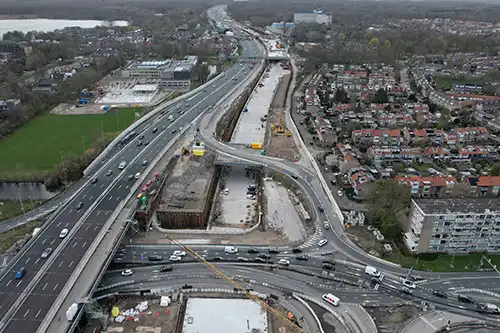
FCC Construcción continues to strengthen its commitment to sustainable infrastructure in its major projects such as the A9 Badhoevedorp–Holendrecht (A9 BaHo) renovation in Amsterdam.
The widening and deepening of the A9 motorway between Badhoevedorp and Holendrecht in The Netherlands is becoming a benchmark project for circular infrastructure.
The project, commissioned by Rijkswaterstaat and delivered by the VeenIX consortium—led by FCC Construcción—has introduced several pioneering initiatives in 2025 aimed at reducing environmental impact, improving circularity, and advancing sustainability performance. This initiative was developed within the frameworks of the environmental assessment that the project is doing of its materials through the Dutch methodology, MilieuKostenIndicator (MKI, Environmental Cost Indicator, in English), and the CO2 Performance Ladder certification.
Circular concrete through collaboration between the value chain
A key milestone in the project has been the development and use of sustainable concrete produced through collaboration between main suppliers of the A9 BaHo project and FCC Construcción.
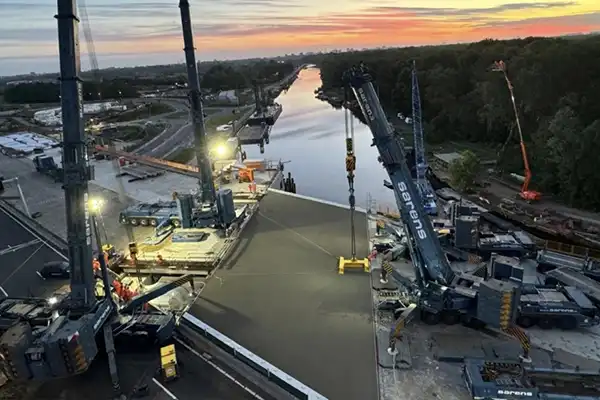
The sustainable concrete was made from concrete rubble generated from the demolition of former A9 viaducts and was processed and recycled by Renewi using advanced separation techniques. The recovered materials—particularly recycled sand and aggregates—were then reused in new structural concrete supplied by Heidelberg Materials for the construction of new viaducts along the motorway.
This project marked a national milestone, as recycled sand was successfully incorporated into structural concrete for an infrastructure project. Through the efforts from the whole value chain, it was demonstrated that materials recovered from demolition can meet the strict quality requirements of structural concrete while significantly reducing the demand for primary raw materials such as natural sand and gravel.
Beyond recycled concrete, the circular strategy also includes the reuse of structural elements. In 2025, concrete girders removed from the A9 near Amstelveen were harvested and reused in other infrastructure projects.