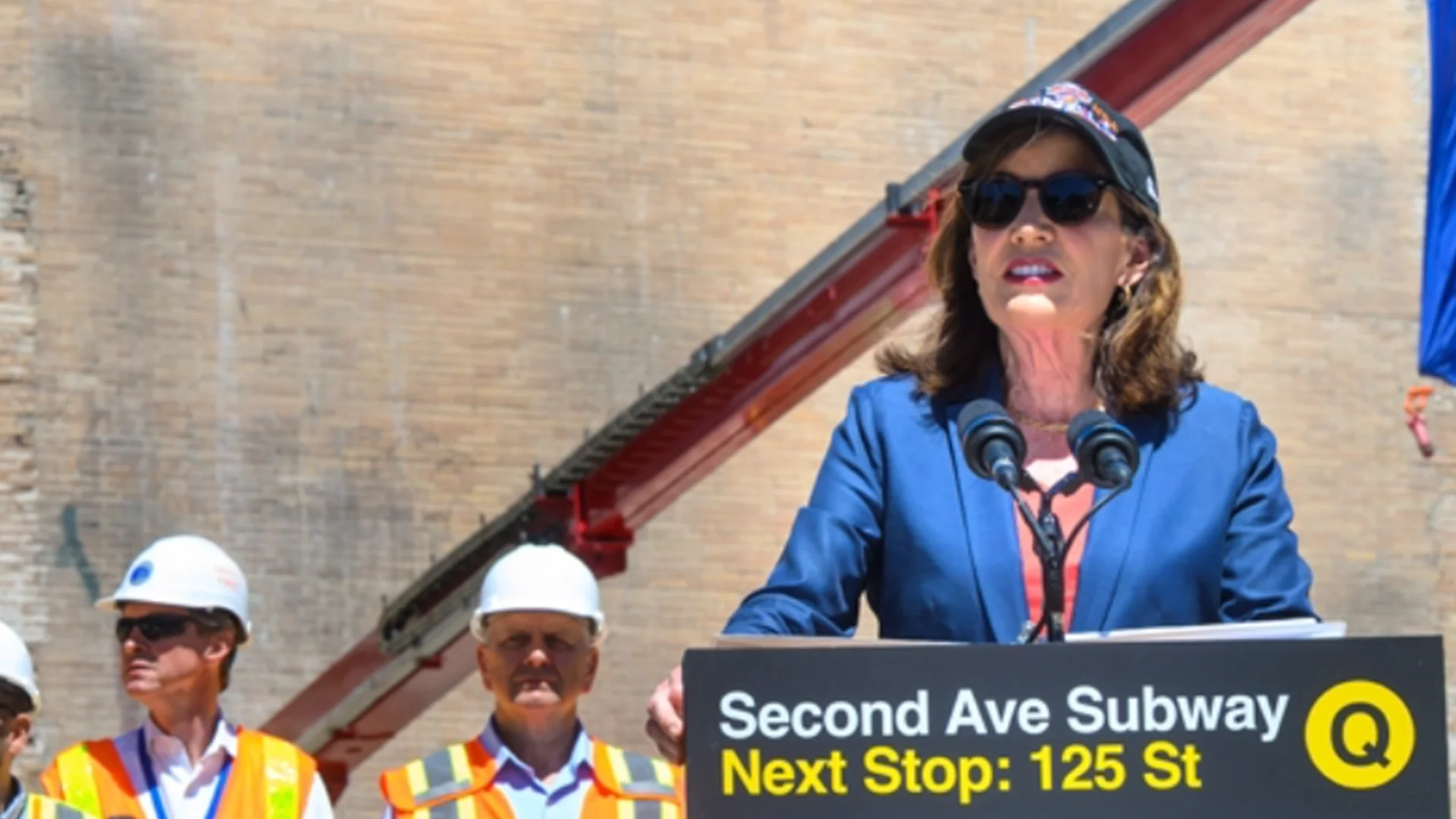
The Governor of New York and senior officials from the Metropolitan Transportation Authority (MTA) have launched work on Phase 2 of the New York Subway expansion on Second Avenue, which will provide a new transport link for more than 100,000 daily commuters in East Harlem. The groundbreaking ceremony took place on the site where, in early 2027, the tunnel boring machine (TBM) will begin excavating the new subway tunnels, running from 120th Street and Second Avenue to 125th Street and Malcolm X Boulevard. East Harlem is a neighbourhood that has historically been home to one of the largest concentrations of affordable housing in the United States, where 70 per cent of residents rely on public transport. Phase 2 will create three new accessible stations in the heart of the community — at 106th, 116th and 125th Streets — and will offer direct journeys (without changes) from East Harlem to the Upper East Side, West Midtown and Coney Island, reducing journey times by up to 20 minutes.
Phase 2 of the Second Avenue Subway includes the excavation of the access shaft for the tunnel-boring machine, controlled blasting for the future stations and the removal of asbestos and lead from the existing tunnels dating from the 1970s. The contract includes the conversion of a 762-metre tunnel, built in the 1970s between 116th and 125th Streets, into a station as a cost-saving measure for the project. It also involves drilling a 2,560-metre tunnel to Malcolm X Boulevard and excavating the cavity for the 125th Street station, as well as excavating shafts for ancillary buildings and future access points. The tunnel will be excavated using two variable-density tunnel boring machines (TBMs) manufactured in Germany, weighing 1.5 million pounds, which can switch between soft soil and hard rock without needing to be dismantled.
FCC Construcción has extensive experience in the design and construction of major metro lines in capital cities around the world, including Madrid, Barcelona, Málaga, Panama, Lima (Peru), Toronto (Canada), Doha (Qatar), Riyadh (Saudi Arabia), Athens and Porto (Portugal), amongst others.
Available languages: