The 0ACCIDNTES consortium, led by FCC Construcción and comprising the business partners BECSA, FRACTALIA, METALICAS PLÁSTICAS JAR, ALISYS, IDP, LIS DATA and SIGNE, with the collaboration of the technology centres ITA, CETIM and AIMPLAS, and with the support of the Spanish Construction Technology Platform (PTEC) and INCOTEC as an external R&D&I consultancy, has completed the project “Research into new technologies for health and safety in construction with ‘0 Accidents’”, funded by the Centre for Industrial Technological Development (CDTI) as part of the CIEN Strategic Programme.
The project began in 2022 and was completed in the second quarter of 2026.
The overall objective of the project was to develop a comprehensive cognitive ecosystem for the real-time monitoring and prediction of situations posing a risk to the health and safety of 21st-century construction workers, by conducting research that enables the collection, interpretation, digitisation and intelligent, automated management of information generated in different construction environments, based on state-of-the-art sensors, autonomous robotic systems, cyber-secure connectivity ecosystems and various elements of artificial intelligence.
To this end, the project has been divided into two milestones, comprising a total of six technical activities. The first milestone consisted of four activities: the definition and development of the sensor system to collect data relevant to occupational risk prevention in construction environments, and the required communication and safety protocols. Research into diverse, multi-purpose technological solutions to predict hazardous situations or the risk of accidents, and the definition of the requirements and architecture of the digital twin.
During the first milestone, technologies aimed at improving safety in construction environments were developed and validated, including smart PPE with fall detection and location capabilities, computer vision systems for risk monitoring, and low-power IoT communications. The integration of these elements improves the detection of hazardous situations and increases the accuracy of preventive protocol activation. Furthermore, a blockchain-based digital identity management system (EBSI) has been implemented; CFD simulations have been carried out to analyse diesel emissions and optimise ventilation in tunnels; and data generation for training more robust models has been facilitated.
Finally, the design of the digital twin’s ICT architecture and its preliminary interfaces has been completed, integrating BIM-GIS models, real-time data and visualisation tools that facilitate the continuous monitoring of safety conditions and preventive decision-making.
The second milestone has involved the research and development of the information management platform, the construction of prototypes and their validation in controlled environments, with the aim of assessing the level of accuracy achieved.
The 0ACCIDNTES platform has been designed as the project’s integrating core, coordinating communication between the various developments based on advanced sensor technology, deployed in two complementary use cases: construction, involving work at height, and tunnels, involving work in confined spaces, with regard to the final tests.
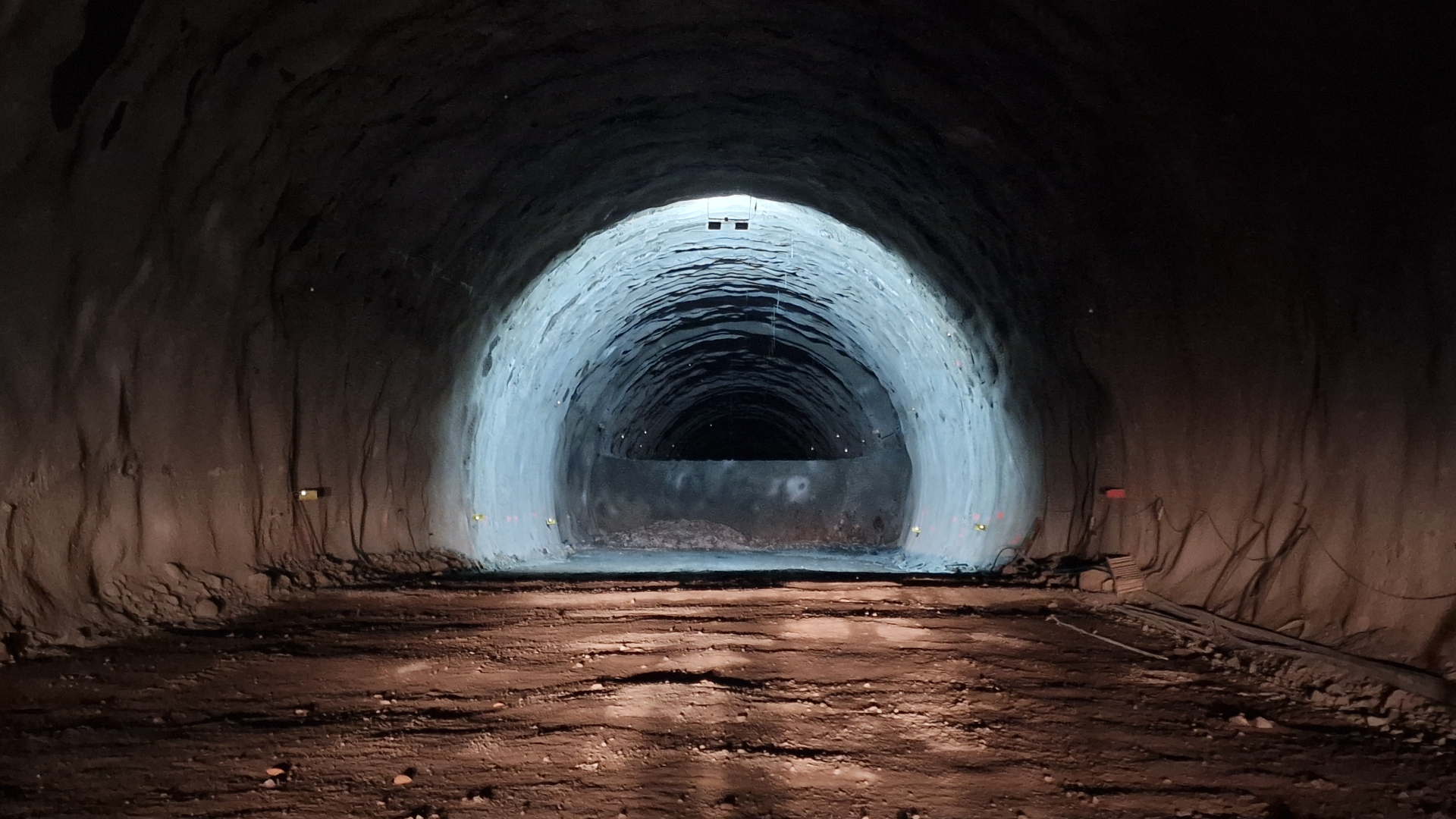
In the construction sector, and more specifically at Becsa’s new hospital research building in Alicante, a quadruped robot equipped with cameras and LIDAR has been developed. By generating maps of its surroundings, it plans and carries out autonomous inspection missions, incorporating an AI layer that assesses the condition of collective protective measures and detects risk situations arising from their absence or inadequacy. This is complemented by smart PPE, including an instrumented helmet and harness, which provide direct data on the worker and their exposure to risk. In the tunnel – more specifically at FCCCO’s Tenerife Insular Ring Road Closure project – public works machinery, specifically a concrete mixer lorry, has been fitted with sensors to detect machinery and people in its vicinity, predict their trajectories and generate risk maps and alerts for potential collisions and accidents, alongside virtual sensors for measuring and assessing air quality.
All this information converges into a single stream: the data and alerts are certified via blockchain and sent to the Data Lake, from where the platform retrieves them for assessment by health and safety technicians, representing them on digital twins that provide context and facilitate their spatial interpretation.
The prototypes have been validated through successive test campaigns in controlled on-site environments, following an iterative approach across three levels of testing: initial, intermediate and final. The intermediate tests represented a key and necessary transition from the preliminary technical tests to the final tests, which were carried out at a 74-flat block in Tres Cantos and at a central machinery yard, both owned by FCCCO.
Each validation cycle confirmed the technical feasibility of the solutions and identified areas for improvement, which led to adjustments to the developments. The final testing campaigns demonstrated the integrated operation of the ecosystem under representative operating conditions, verifying interoperability between devices, the platform and the Data Lake, as well as the correct functioning of the localisation, autonomous navigation, risk monitoring and alert generation systems.
In short, the 0ACCIDNTES project has been successfully completed, having met the objectives set out at the outset. As a result, it enhances and safeguards workers’ health and safety through the application of cutting-edge technologies for the early detection of occupational risks, whilst also contributing to a reduction in workplace accidents throughout the entire value chain and to increased business competitiveness.
Available languages: