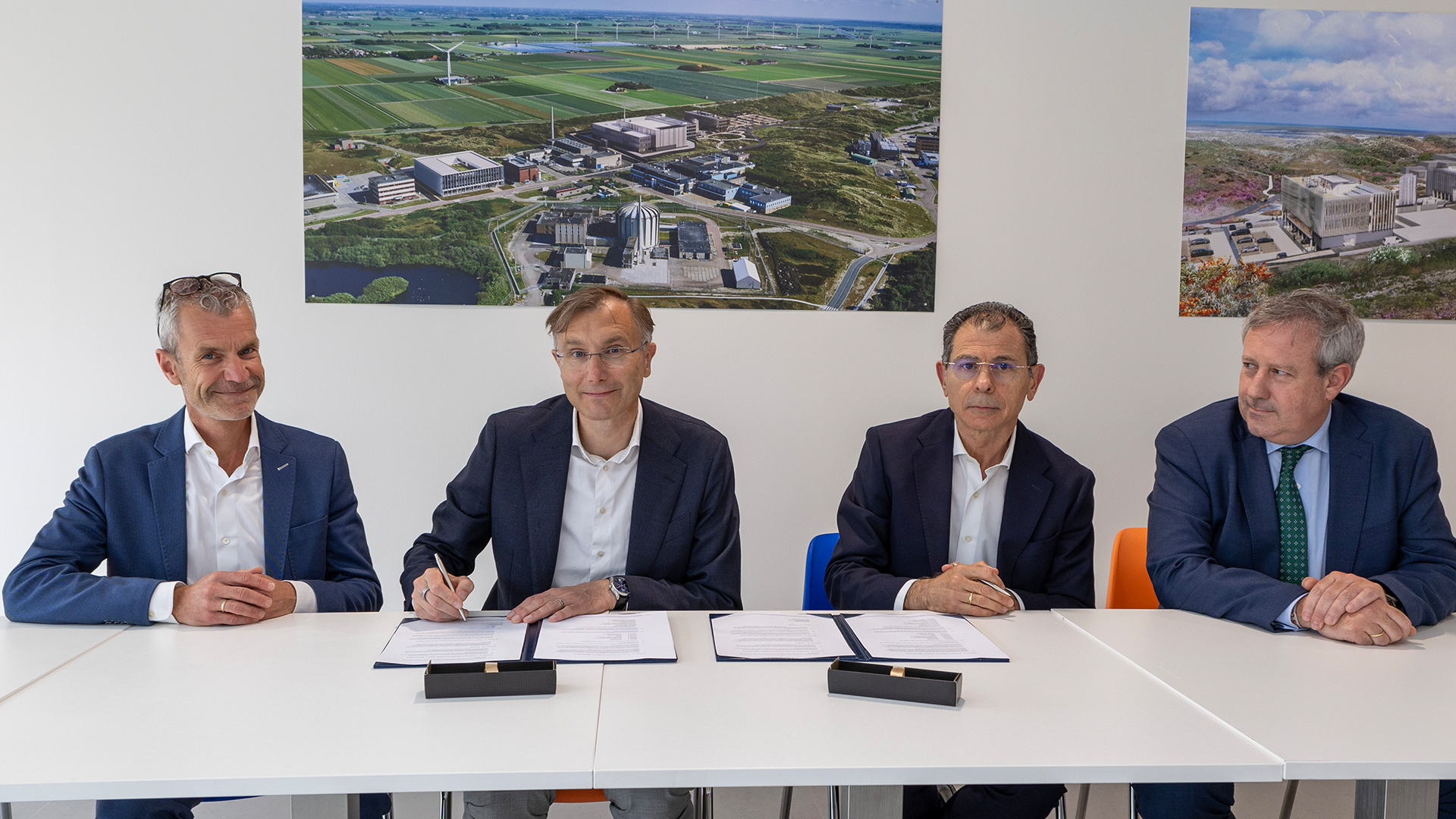
NRG PALLAS and FCC have signed an agreement for the supply and installation of the hot cells for the new PALLAS reactor. This marks an important step in the construction of the reactor and demonstrates the steady progress of the construction process in Petten. The agreement brings together the expertise of NRG PALLAS as the future operator, ICHOS as the design representative, and FCC as a leading international construction company.
A vital link in the isotope supply chain
The hot cells are an indispensable part of the PALLAS reactor. They provide a safe, shielded environment in which irradiated products can be handled, inspected, measured and packaged following irradiation in the reactor core. In this way, the Hot Cells form the vital link between irradiation in the reactor and safe transport to customers — and, ultimately, to more than 30,000 patients a day who rely on medical isotopes.
Designed for safety, efficiency and flexibility
What makes the PALLAS reactor’s hot cells unique is their integrated design. The entire process takes place within a single building. This reduces the need for transport between different facilities, limits intermediate handling steps and contributes to the safety, efficiency and reliability of the medical isotope supply chain. The design also allows for high-volume processing, whilst maintaining sufficient flexibility to meet customer needs, research applications and future market developments.
Maurits Wolleswinkel, CEO of NRG PALLAS: “The hot cells are technically complex and crucial to the overall operation of the reactor. Their integrated design requires close coordination between engineering, construction, operations and specialist suppliers. This agreement provides us with a solid foundation for the next phase: manufacturing, installation and commissioning.”
Keeping construction on track
The hot cells will be integrated directly into the civil structure of the reactor building. This makes the agreement an important milestone in the planning and execution of the construction process. As this is a long-lead item, early procurement and preparation of the hot cells are essential to keep the overall project on track. Following the agreement, the next steps include manufacturing, installation and commissioning.
José Martínez, FCC’s project director for the PALLAS project: “We are proud to contribute our specialist expertise to the PALLAS reactor. The hot cells require a high level of precision, safety and technical performance. Together with NRG PALLAS, ICHOS and Asturfeito, we will deliver a solution that enables reliable production and the safe handling of irradiated materials.”
With the signing of this agreement, NRG PALLAS and its partners take another important step towards the successful realisation of the PALLAS reactor and the safeguarding of the future supply of medical isotopes for patients worldwide.
Available languages: